

The Social and Economic Impact of Immigration in Canada
Immigration has always been part of Canada’s identity.
Today, nearly 23% of Canada’s population is foreign-born, the highest proportion among G7 countries.
According to the CIMM, the federal government is setting ambitious targets of 500,000 new permanent residents per year by the end of 2025. The impact of immigration on Canada is felt across every sector of society.
One area seeing remarkable growth is the translation industry, which is adapting to meet the needs of increasingly diverse newcomers.
This article explores how the impact of immigration on Canada is reshaping demand for translation services, which language pairs are on the rise, and what challenges translators face.
Why Immigration is Transforming Canada’s Translation Needs
The impact of immigration on Canada extends beyond population growth; it drives demand for specialized services.
Immigration by the Numbers
- In 2023, Canada welcomed 471,550 new permanent residents (IRCC data).
- By 2041, it’s projected that up to 34% of Canadians will be foreign-born.
- Top source countries in 2023: India, China, the Philippines, Afghanistan, and Nigeria.
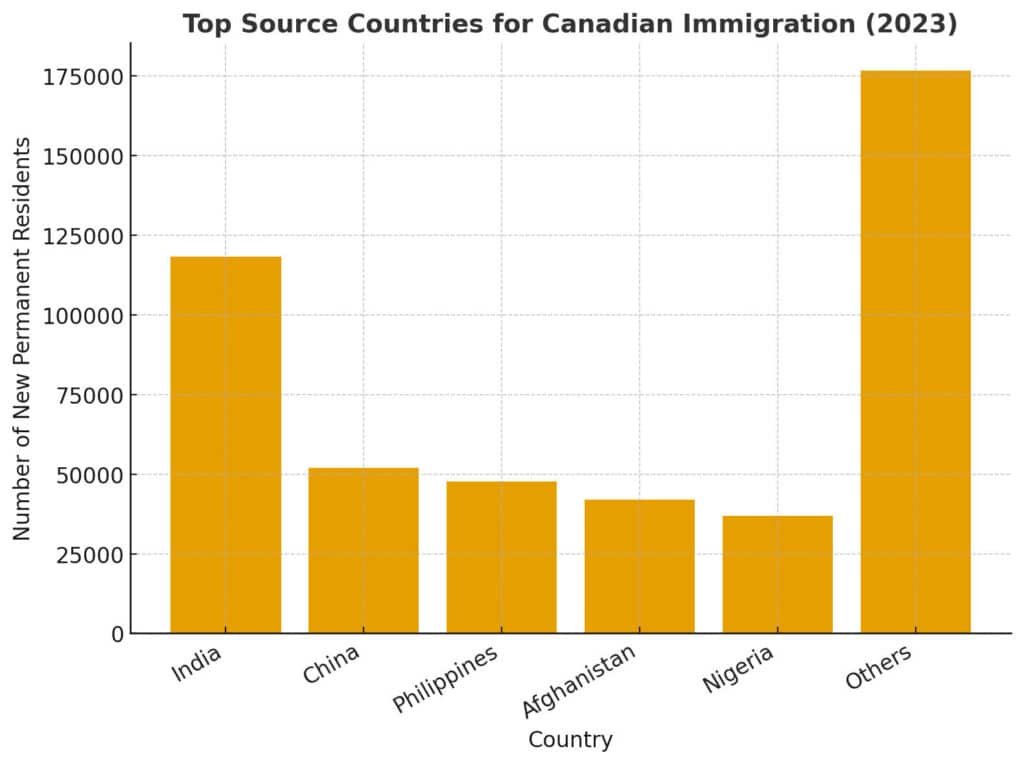
These trends mean thousands of official documents, birth certificates, marriage licenses, medical records, and academic transcripts must be translated into English or French for immigration, work, or education purposes.
Why Is Translation Critical for Immigration to Canada?
- Legal requirements: IRCC mandates certified translations for official documents.
- Integration: Access to healthcare, education, and employment depends on accurate translations.
- Equity: Providing services in newcomers’ native languages supports smoother settlement.
Emerging Language Pairs in Canada’s Translation Market
The impact of immigration on Canada from various countries and cultures has opened the door for translation services within the country.
Traditionally speaking, as both English and French are official languages within Canada, those two language pairs have always dominated the Canadian sector. But now, new languages are becoming more predominant within Canada.
These new language pairs are also affecting Canadian businesses not only globally, but within Canada.
Traditional Language Pairs
- French ↔ English: Still dominant due to Canada’s bilingual status.
- Chinese ↔ English: Long-standing demand thanks to Canada’s large Mandarin and Cantonese-speaking communities.
Rising Language Pairs Due to Immigration
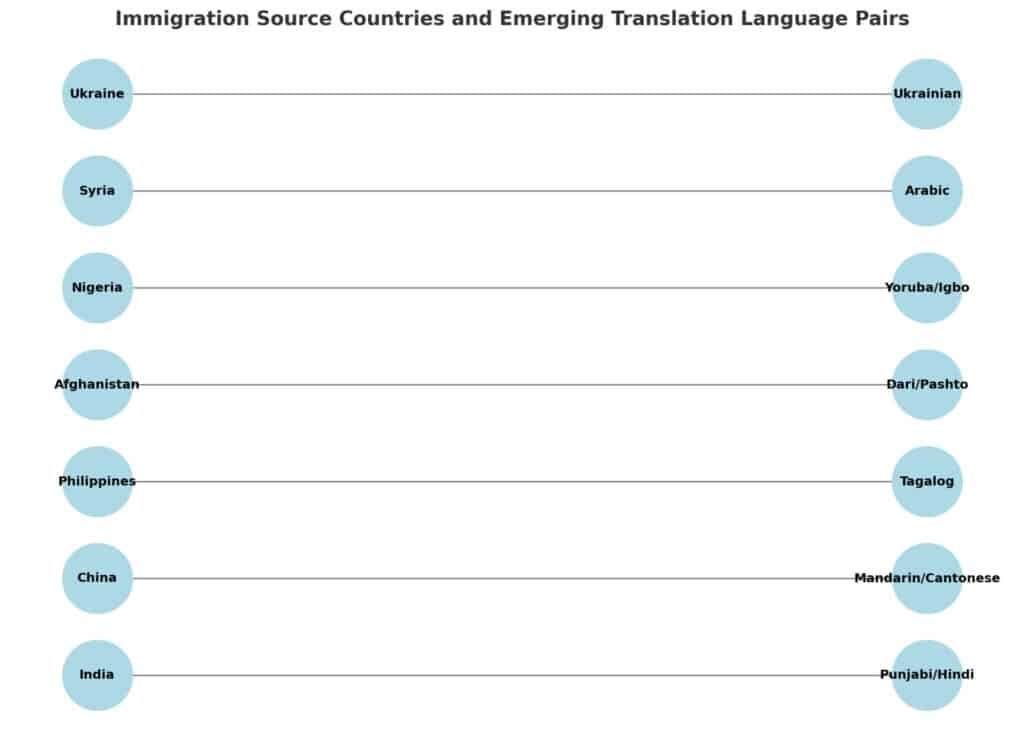
The impact of immigration on Canada’s language mix is most visible in the new demand for translations:
- Punjabi ↔ English/French: Punjabi is now the third most spoken language in Canada, with over 1 million speakers.
- Tagalog ↔ English: Driven by consistent immigration from the Philippines.
- Arabic ↔ English/French: Growth linked to immigration from Syria, Lebanon, and Egypt.
- Spanish ↔ English/French: Reflecting increased arrivals from Latin America.
- Ukrainian ↔ English: Surge in demand due to refugee resettlements.
Example: After the Syrian refugee crisis in 2015 to 2016, many Canadian translation agencies reported a sharp increase in Arabic-English translation requests, particularly for legal and medical documentation.
What Are the Challenges for Translators in Canada’s Immigration Sector?
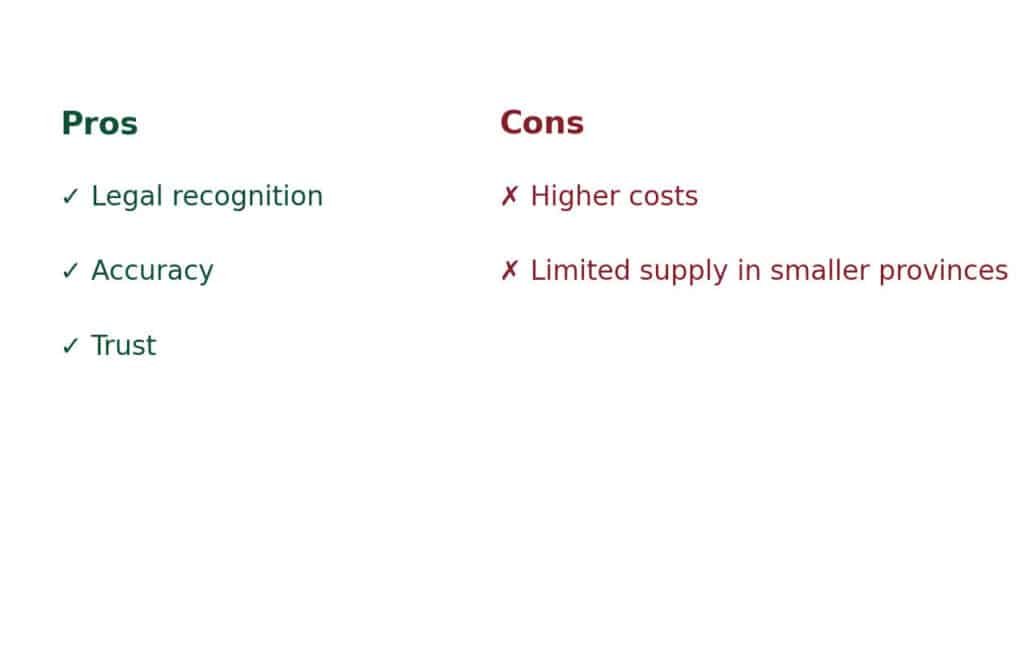
Certified vs. Non-Certified Translation
- Certified translators are required by IRCC for all immigration documents.
Cultural and Legal Nuances
Translating isn’t just about words; it’s about systems.
For example, a university diploma from India may use terms that don’t align neatly with Canada’s education framework, requiring not just translation but also adaptation.
This is an impact of immigration on Canada that many might overlook, but occurs daily.
The Role of Technology
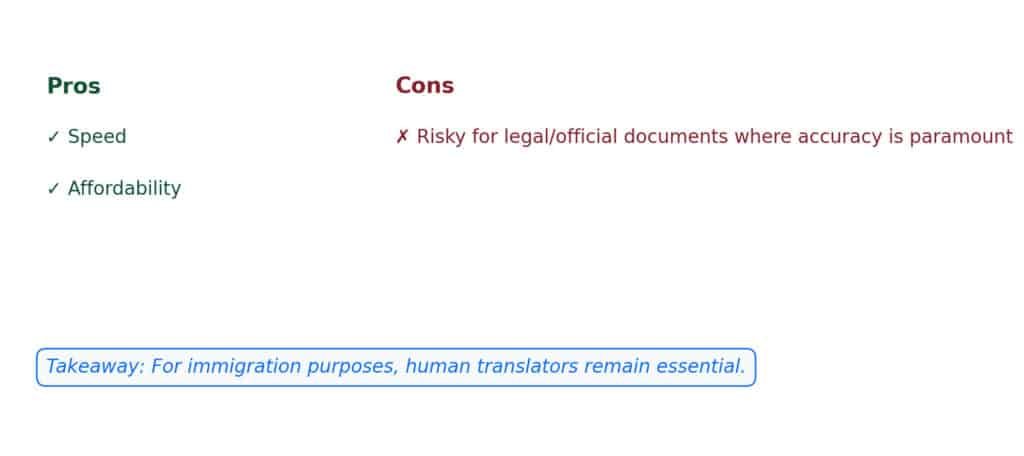
- Machine Translation (MT): Tools like DeepL and Google Translate are improving, and even large language models (LLMs) can assist.
How the Impact of Immigration on Canada is Providing Opportunities and Growth in the Translation Industry
Rising Demand for Specialized Professionals
Immigration is creating a steady demand for translators specialized in:
- Legal documents
- Medical records
- Academic credentials
Future Outlook
- Immigration targets: 500,000 newcomers annually by 2025.
- New niches: Refugee programs, humanitarian immigration, and international student applications.
- The impact of immigration on Canada’s translation industry will be long-lasting, as growing diversity keeps demand strong.
Immigration as a Driver of Growth in Translation
The impact of immigration on Canada is not just demographic; it is deeply linguistic and cultural.
As immigration levels continue to rise, translation services are now a must for integration. They give newcomers access to opportunities and full participation in Canadian life.
For translators, this shift brings unprecedented opportunities to specialize and grow.
For Canada, it paves the way for a more inclusive society, where diversity is supported not only in principle but also in practice, through language.
If you’re looking for professional support, BeTranslated offers certified translation services tailored to immigration needs, helping individuals and families handle the process with confidence and accuracy.
